Decoding the Multi-Dimensional Communication Capabilities of the ECO-WORTHY 48V100Ah Server Rack Battery

Decoding the Multi-Dimensional Communication Capabilities of the ECO-WORTHY 48V100Ah Server Rack Battery

-----------Supports master-slave interconnection, compatibility with mainstream inverters, and seamless integration with various monitoring systems

I. Product Background and Application Scenarios

In residential and small commercial energy storage systems, communication capabilities determine the level of intelligence of the battery system and the ease of system integration. The 48V 100Ah Server rack battery launched by ECO-WORTHY not only has  energy storage capabilities of high-performance but also supports a variety of communication interfaces and protocols. It enables multiple types of data interactions between batteries, between batteries and inverters, and between batteries and various monitoring/remote platforms, greatly enhancing the system's intelligence level and remote maintenance capabilities.Learn how other websites introduce our 48V 100Ah Server Rack Battery


This communication capability allows it to be adapted to a variety of practical scenarios, including parallel expansion, precise control of inverters, and data collection of remote monitoring . It is a key core component in intelligent energy storage systems.

II. Master-Slave Communication Capability Between Batteries
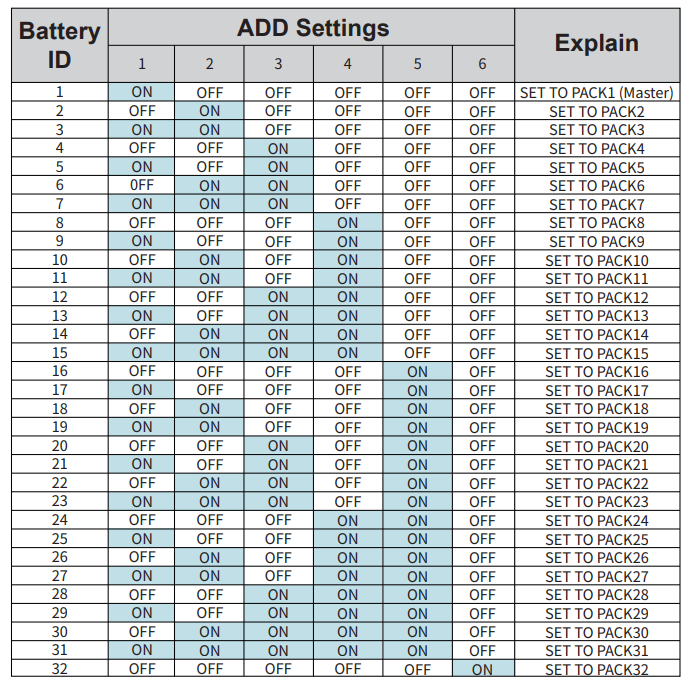
Schematic diagram of DIP switch
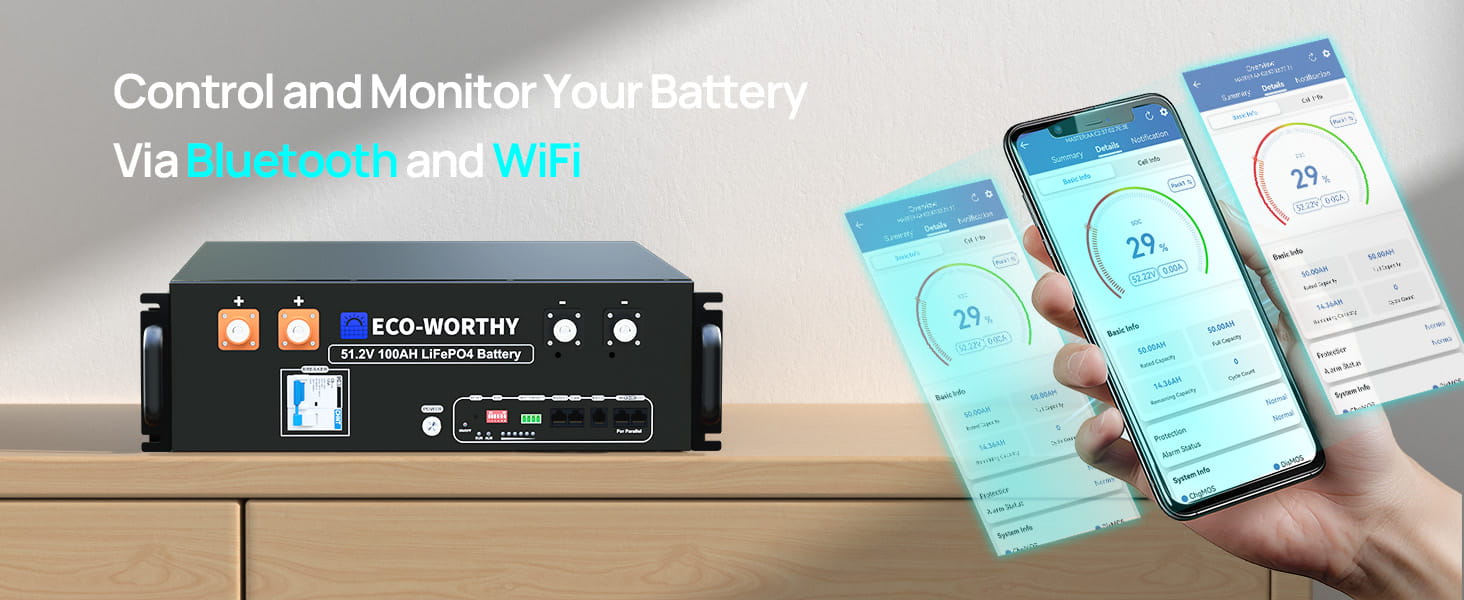
The 48V100Ah server rack battery from ECO-WORTHY supports parallel use of multiple units, which work together through a master-slave communication mechanism to ensure the safe operation and consistent status of the entire battery group. 


In a parallel system, one battery will act as the “master battery,” taking on the task of communicating with external devices (such as inverters or monitoring terminals) and synchronizing relevant control commands to all “slave batteries.” All batteries are interconnected through RS485 communication cables to achieve information synchronization and command broadcasting.

The master-slave mode has the following characteristics:


· Support for setting the master battery
· Guarantee of consistent status among multiple batteries
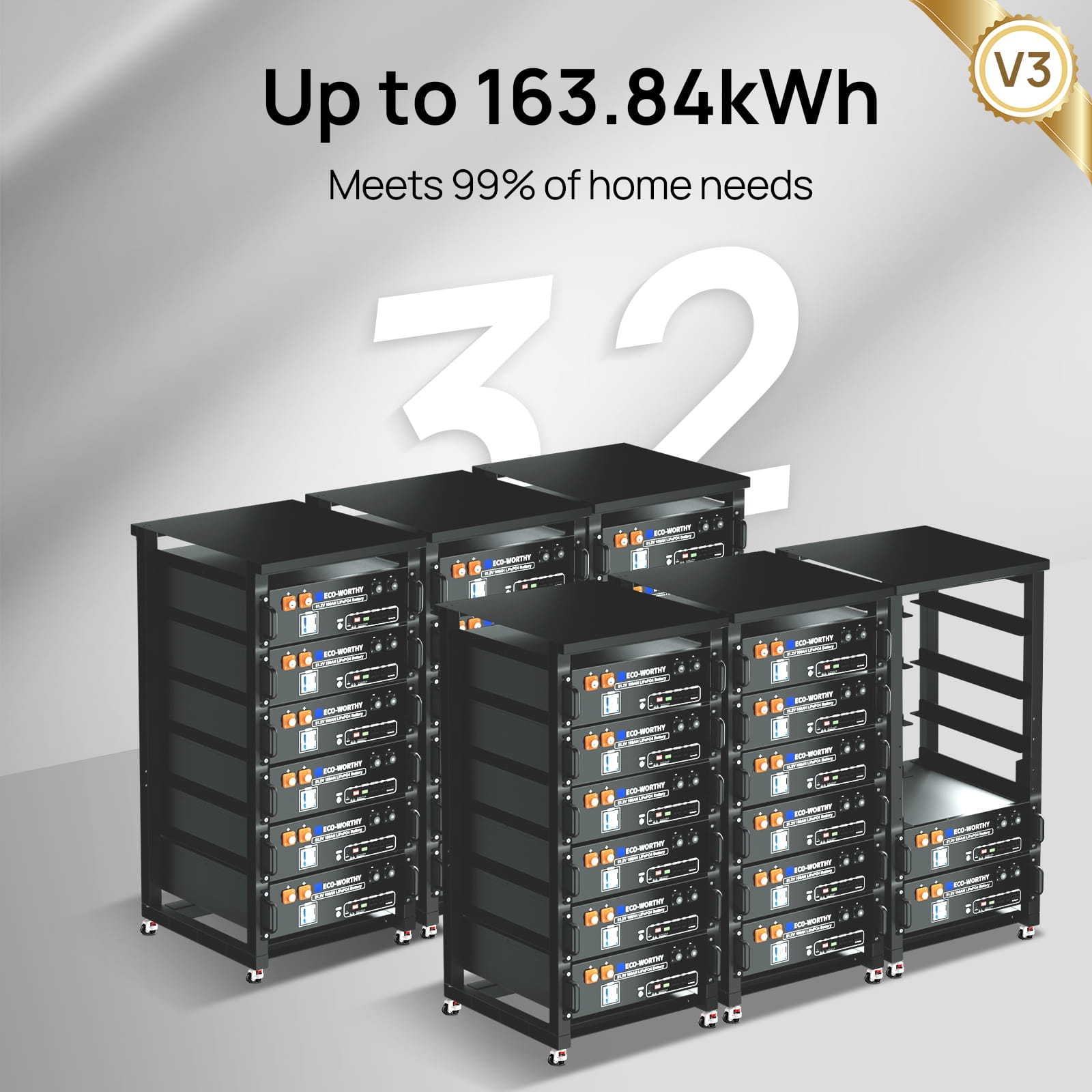
· Maximum parallel quantity supported: V2.0 supports up to 15 parallel units; V3.0 supports up to 32 parallel units

This master-slave communication mechanism simplifies system wiring and configuration, enhances overall operational stability and scalability, and is suitable for a variety of scenarios such as residential expansion and commercial parallel systems.

III. Communication Compatibility Between Battery and Inverter

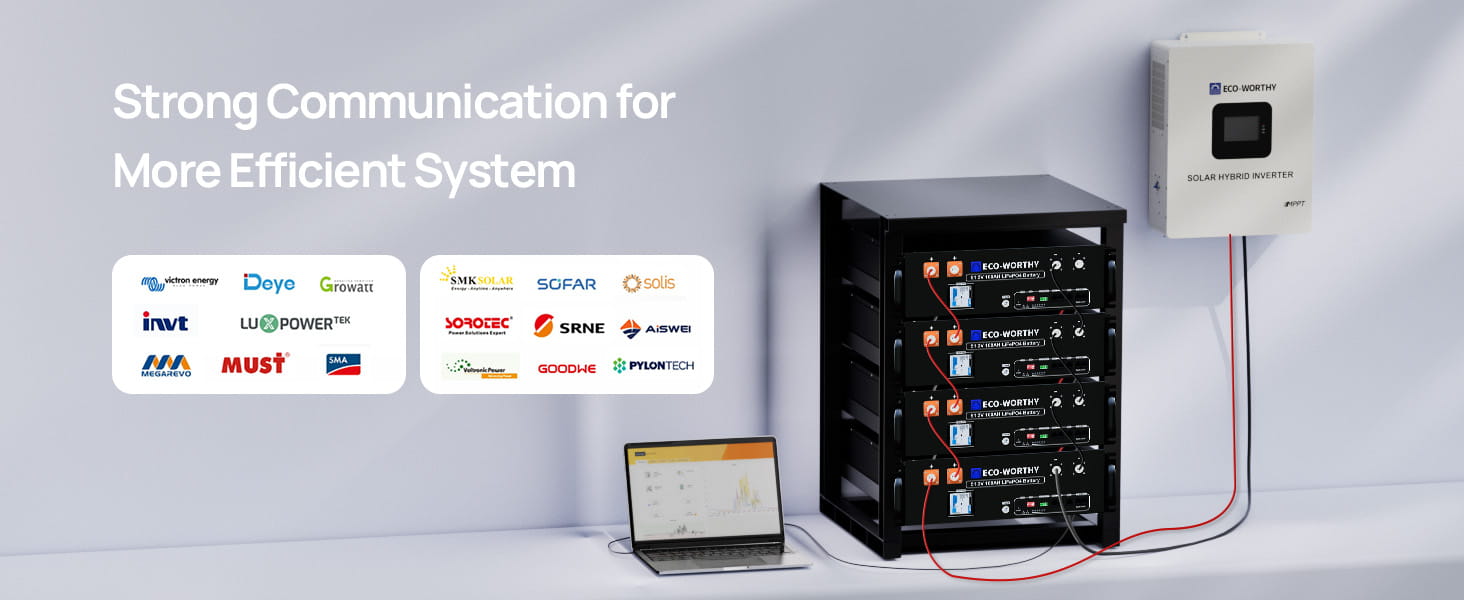
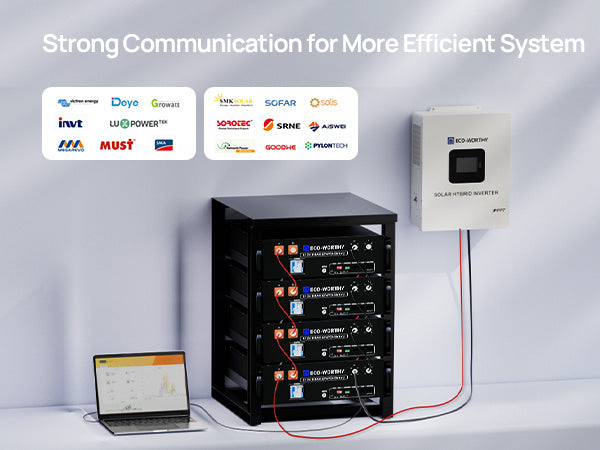
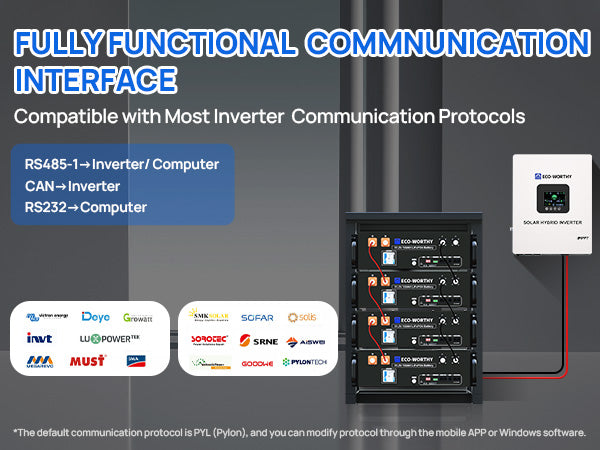
To achieve intelligent control of energy storage systems, effective communication between the battery and the inverter is crucial. The 48V100Ah server rack battery from ECO-WORTHY supports a variety of mainstream protocols and interfaces, enabling seamless integration with major brands of energy storage inverters on the market.

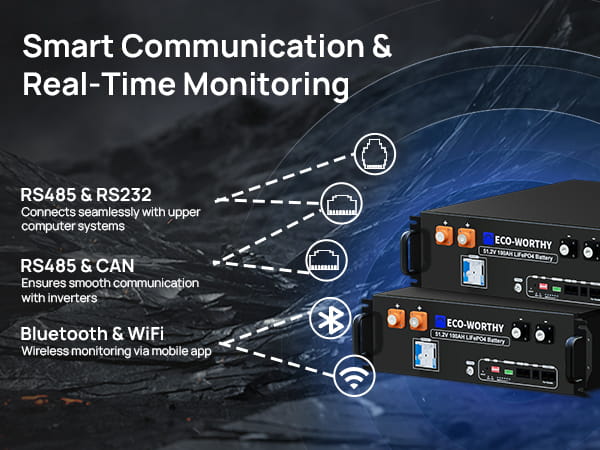
Communication interfaces supported: RS485, CAN

Examples of Compatible Brands: Growatt, Deye, Victron, Voltronic, SRNE, Pylontech protocol compatibility, etc.
Through the protocols, the battery can upload operating parameters such as SOC (State of Charge), voltage, current, and temperature to the inverter and receive its charge-discharge control signals, achieving system coordinated control.

The supported protocol configuration methods include DIP switch settings and upper computer software settings, catering to the needs of different customers.

IV. Communication Support with APP/Upper Computer/SA/HA
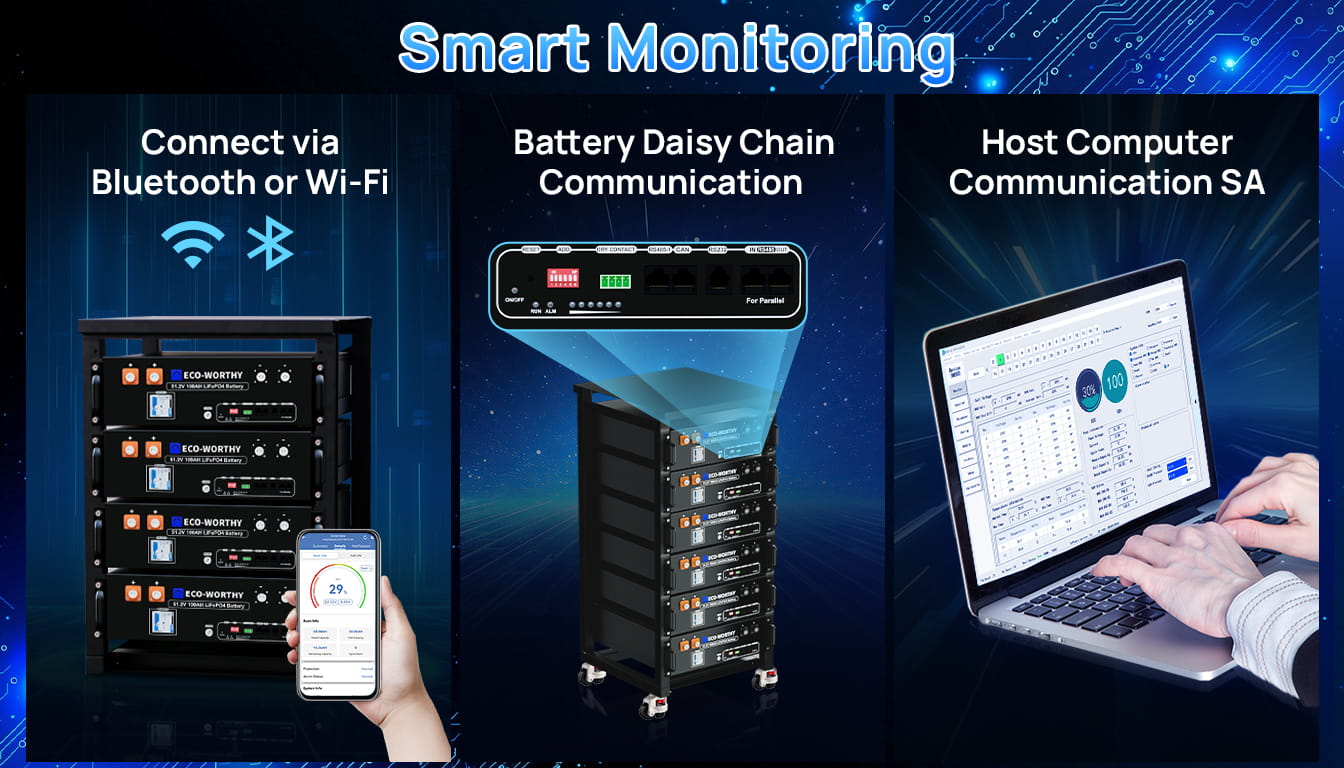
To achieve remote monitoring and customized data retrieval, the battery also provides communication capabilities with upper computers, system aggregators (SA), and home automation platforms (HA).


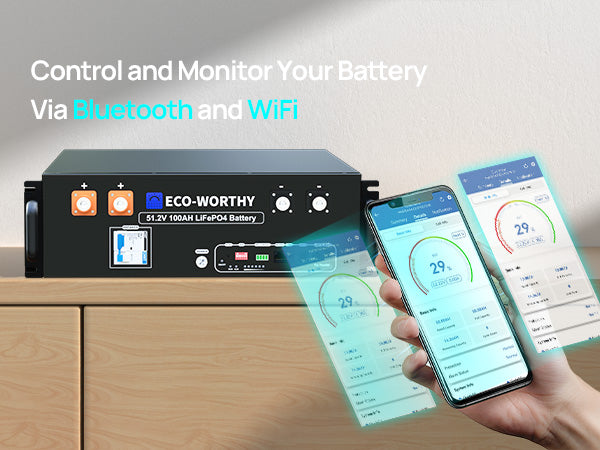
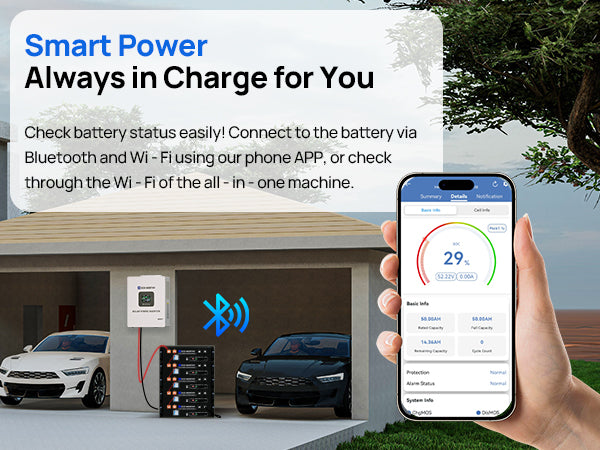
APP Wireless Communication (Supported by V2.0 and V3.0): Bluetooth; WiFi


Communication Cables: RS485 to USB, RS232 to USB

Application Examples:


· PC-based JBD Upper Computer (via USB Serial Port): Real-time parameter reading and firmware upgrades.

· SA (Solar Assistant) Based on Raspberry Pi: Collects information from multiple battery groups and uploads it to the cloud platform.
· HA Platform (Home Assistant): Supports multi-platform access and, through the BMS_BLE-HA library, can easily connect with our batteries to achieve smart home integration.


This functionality enhances the system compatibility of the battery, providing a technical foundation for remote data integration and intelligent energy management.

V. A “Communicative” Smart Battery

Related Blog Posts

The core theme of this related article is “Intelligent Battery Communication,” focusing on the communication functions and technologies of the 48V 100AH server rack battery and its related devices. It covers master-slave communication, upper computer communication, mobile APP communication, and inverter communication, aiming to help users understand and apply these technologies.

💬 Leave a comment Now

Leave a comment

5 comments

Communication features are an important part of modern battery storage systems, especially when several batteries, an inverter, and monitoring tools need to work together. I came across [captainspins](https://captainspins.nz/) while reading about server rack batteries and found some useful information about system integration and monitoring. Support for multiple communication protocols can make installation and troubleshooting much easier. I’d still check the exact inverter compatibility and required settings before building a complete system around a particular battery.

Emma Brown

Smart energy storage is becoming more important as people look for reliable and efficient power solutions. The ability of batteries to communicate with each other and work smoothly with different systems makes a huge difference in everyday use. Features like remote monitoring and easy expansion help users manage energy more effectively. I was also exploring some useful resources and ideas here: https://chicken-subways.net/ — interesting to see how technology keeps evolving.

Biji Gw

Smart energy storage is becoming more important as people look for reliable and efficient power solutions. The ability of batteries to communicate with each other and work smoothly with different systems makes a huge difference in everyday use. Features like remote monitoring and easy expansion help users manage energy more effectively. I was also exploring some useful resources and ideas here: https://chicken-subways.net/ — interesting to see how technology keeps evolving.

Biji Gw

In my own work optimising similar setups, I’ve found that the real-world success of such an installation hinges not just on the hardware specs, but on the reliability of this data exchange. This is where having a solid, trustworthy partner for your project’s ancillary needs can make a world of difference. For instance, when sourcing compatible monitoring interfaces or ensuring seamless data logging for performance analysis, I’ve often turned to platforms like https://vegashero.nz/ for their range of supporting tech. They provide the kind of supplementary equipment that helps you get the most out of a sophisticated battery system, ensuring you can actually utilise all that smart communication data effectively.

johnhargen2

I have 12 residences that my solar / battery system will serve. I need a total of not less than a 850 KW battery / inverter system. The system requires 120volt / 240 volt single phase system. How would you set up a system of batteries and inverters that could power 850 KW of batteries to inverters? Can we tie your inverters together to power all 12 residences or must we limit the systems to 2 or 4? The system will be charged daily by a very large PV Solar system. We have the PV Solar system in place now, We need the batteries and the inverters only. Cell phone number is 928-750-7592. Thanks, Bob

Bob